🧾 Real Leather vs Faux Leather — The Honest Comparison
Understanding the Difference, So You Can Choose Wisely
In a world full of “leather” labels — genuine, faux, vegan — it’s easy to feel lost. Many jackets look alike at first glance, but the truth lies in how they’re made and how they age.
At Sunfyre, we believe in transparency and craftsmanship. This guide breaks down the real differences between authentic full-grain leather and synthetic faux leather, so you can make an informed, sustainable choice.
🐂 What Is Real Leather?
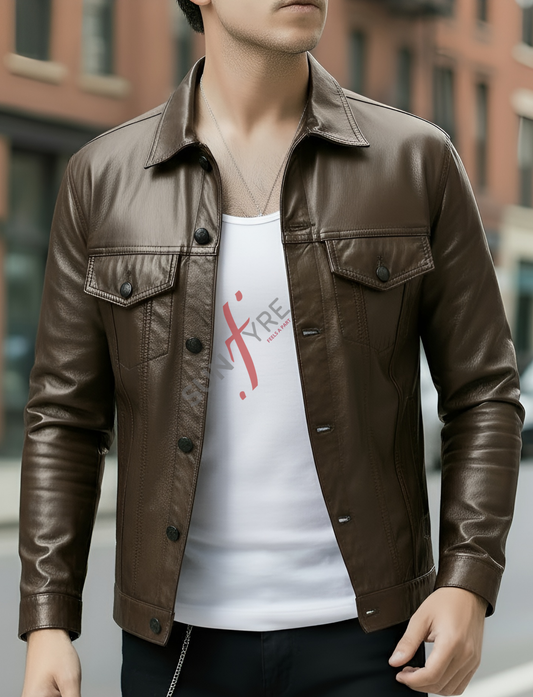
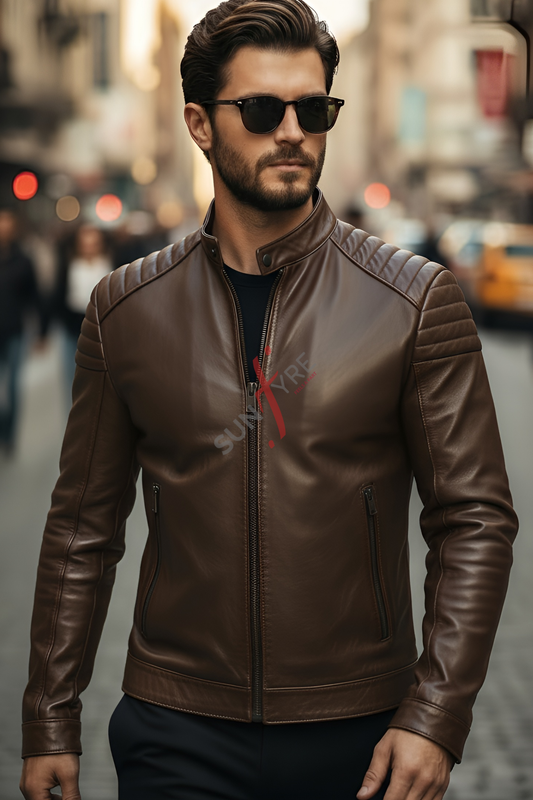
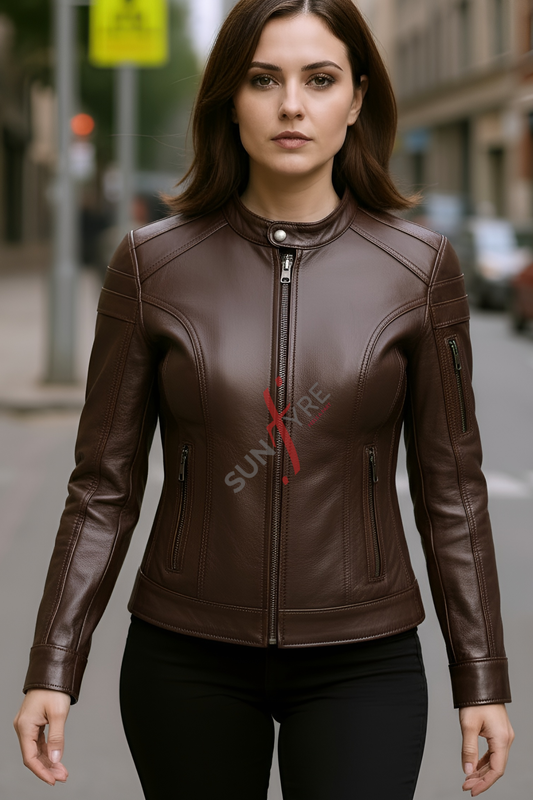
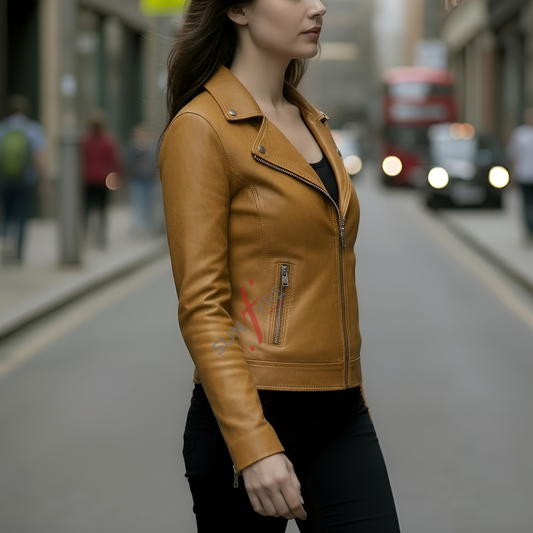
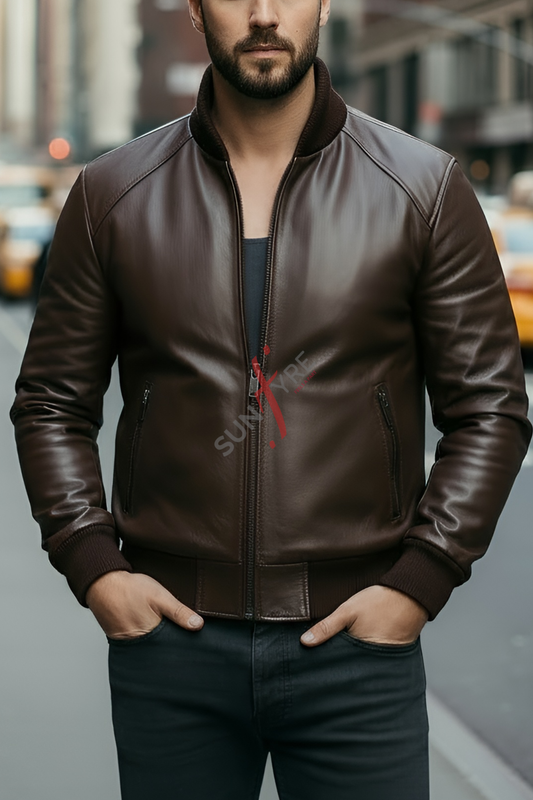
Real leather comes from natural animal hides. The highest grade, known as full-grain leather, preserves the outer layer of the hide — the toughest and most beautiful part.
Because it retains its natural grain, full-grain leather develops a one-of-a-kind patina over time, getting softer, richer, and more personal the longer you wear it.
At Sunfyre, every jacket is made from ethically sourced full-grain sheepskin or cowhide, ensuring both durability and comfort.

💡 No two jackets are identical — each carries its own unique grain pattern and character.
Explore: What Is Full-Grain Leather?
🌱 What Is Faux Leather?
Faux leather (also called synthetic or vegan leather) is made from plastic-based materials like polyurethane (PU) or polyvinyl chloride (PVC). It mimics the look of leather but lacks the natural fibers that give real leather its breathability and strength.
Faux leather is typically cheaper to produce, but it’s less durable and doesn’t age gracefully. Over time, it can crack, peel, or stiffen, especially when exposed to heat or moisture.
Advantages:
-
Affordable price point
-
Uniform color and texture
-
No animal-derived materials
Disadvantages:
-
Not biodegradable or eco-friendly
-
Traps heat and moisture
-
Lasts only 2–3 years before cracking or peeling

🧵 While it may seem convenient, faux leather often ends up in landfills far sooner than real leather does.
⚖️ Real vs Faux Leather: Key Differences
| Feature | Real Leather | Faux Leather |
|---|---|---|
| Material | Natural animal hide | Synthetic (PU/PVC) |
| Texture | Unique, breathable, flexible | Smooth, uniform, often plastic-like |
| Durability | Decades with care | 2–3 years on average |
| Comfort | Breathable and molds to body | Traps heat and moisture |
| Aging | Develops rich patina | Peels or cracks over time |
| Sustainability | Natural and biodegradable | Petroleum-based, non-biodegradable |
| Feel | Warm, organic, soft | Cold, artificial, rigid |
✨ Real leather improves with age. Faux leather simply deteriorates.

🧥 Why “Genuine Leather” Isn’t Always Genuine
The term “genuine leather” is often used as a marketing label for lower-quality hides. It sounds promising but usually refers to leather that’s been sanded, corrected, and heavily coated — losing its natural strength in the process.
At Sunfyre, we only use full-grain leather, which means no synthetic coatings, no shortcuts, and no hidden layers. Each piece is crafted to last decades, not just seasons.
See the difference:
🌍 Environmental & Ethical Perspective
While faux leather is often marketed as a vegan or eco-friendly choice, it’s important to look deeper. Most faux leathers are petroleum-based and non-biodegradable, meaning they contribute to plastic waste and pollution.
In contrast, real leather — especially full-grain leather — is a natural, durable, and biodegradable material. When sourced responsibly, it has a smaller lifetime environmental impact than plastic alternatives.
At Sunfyre, all leather is a byproduct of the food industry, ensuring no animals are raised purely for hides. Our partner tanneries use vegetable-based tanning agents to reduce water use and chemical discharge.

♻️ A well-made leather jacket can last decades — that’s real sustainability.
Learn more: Leather Care Guide
🔍 How to Tell If Leather Is Real
Here’s how you can identify genuine leather from synthetic alternatives:
-
Texture: Real leather has pores, wrinkles, and natural imperfections; faux leather is overly smooth.
-
Smell: Real leather smells earthy and organic, while faux has a chemical or plastic scent.
-
Touch: Real leather feels warm and flexible; faux feels cold and stiff.
-
Aging: Real leather darkens and softens over time, faux simply cracks or flakes.
🧠 The best way to know? Feel it. Real leather breathes — fake leather doesn’t.
❓ Frequently Asked Questions
1. Is vegan leather better for the environment?
Not necessarily. Most faux or vegan leathers are made from plastic derivatives, which are not biodegradable and release toxins as they break down. Ethically sourced real leather is often the more sustainable choice.
2. How long does real leather last compared to faux?
With proper care, real leather can last 20–30 years or more. Faux leather usually starts peeling or cracking within a few years.
3. Does faux leather peel or crack easily?
Yes. Heat, moisture, and wear can cause faux leather to peel because it lacks natural fiber strength.
4. How can I identify real leather quickly?
Look for uneven texture, visible pores, and a warm feel. Faux leather looks too perfect and feels colder to the touch.
5. Which is more sustainable: real or faux leather?
Real leather, when ethically sourced, is more sustainable because it’s long-lasting, biodegradable, and made from byproducts of other industries.
🧠 Final Thoughts
The choice between real and faux leather isn’t just about price — it’s about quality, longevity, and authenticity.
A real leather jacket, like those made by Sunfyre, isn’t just an outfit; it’s an investment that grows with you, carrying memories and character through the years.
🌟 Sunfyre’s promise: Every jacket we craft is made from ethically sourced, full-grain leather — built to last, age beautifully, and tell your story.